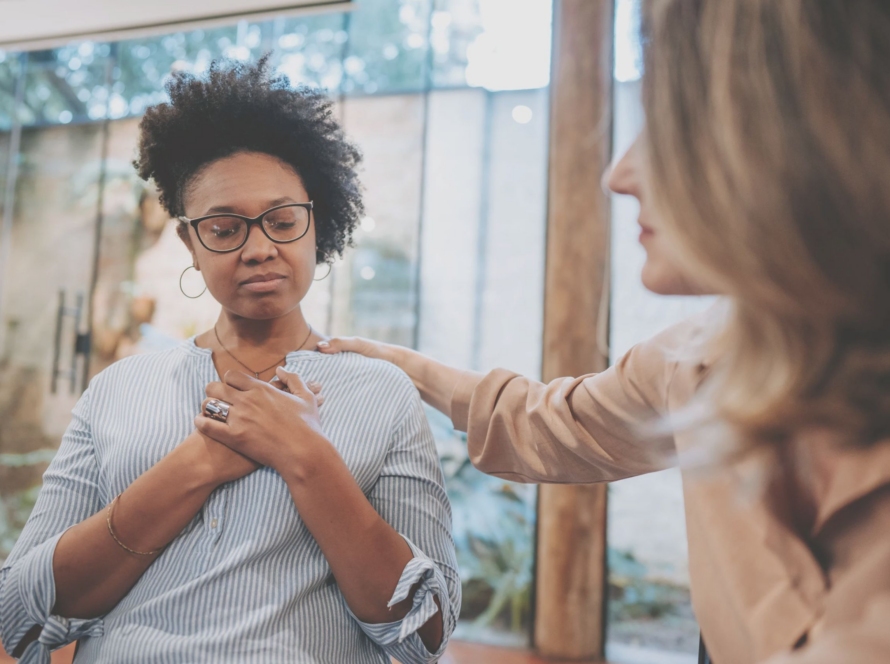


Feeling stuck in survival mode means the brain and body continue preparing for danger even when no immediate threat is present. A person may feel anxious, guarded, irritable, numb, exhausted, or unable to relax because the nervous system is having difficulty moving flexibly between activation and recovery.
A common client question is:
“Why does my body keep reacting as if something is wrong when I know I am safe?”
The answer may involve the autonomic nervous system, the part of the nervous system that helps manage many automatic functions, including heart rate, blood pressure, breathing, and digestion. It also participates in the body’s response to stress and danger. [my.clevela…clinic.org], [my.clevela…clinic.org]
The autonomic nervous system is designed to protect us. The difficulty arises when its protective responses remain highly active or become difficult to recover from after stress.
What is the autonomic nervous system?
The autonomic nervous system, sometimes shortened to ANS, manages many functions that occur without conscious effort.
These include:
- heart rate
- blood pressure
- digestion
- sweating
- breathing patterns
- changes that help the body respond to stress
The sympathetic branch helps prepare the body for action during stress or danger. The parasympathetic branch supports rest, recovery, and energy conservation. Both are necessary. Regulation does not mean remaining relaxed all the time. It means the system can activate when action is needed and settle when the demand has passed. [my.clevela…clinic.org], [simplypsychology.org]
What happens when the nervous system detects danger?
When the nervous system detects a possible threat, it may initiate rapid protective changes.
A person may experience:
- increased heart rate
- quicker or shallower breathing
- muscle tension
- heightened alertness
- racing thoughts
- an urge to leave
- an urge to argue or defend
- difficulty concentrating
- emotional shutdown or numbness
These reactions are not signs of weakness. They are part of the body’s effort to protect itself.
The problem is not that the nervous system reacts. The problem may be that the body continues responding after the danger has passed or reacts strongly to situations that are not currently dangerous.
What are fight, flight, freeze, and shutdown responses?
Protective responses are often described as fight, flight, freeze, or shutdown.
Fight
The person may become argumentative, defensive, irritable, angry, or determined to regain control.
Flight
The person may want to leave, avoid, stay constantly busy, or distance from a difficult situation.
Freeze
The person may feel unable to move, speak, decide, or respond.
Shutdown
The person may become disconnected, numb, exhausted, withdrawn, or unable to access emotion.
Some people may also use pleasing or appeasing behavior to reduce conflict and restore safety.
These terms describe possible protective responses. They do not diagnose a trauma-related condition. Similar reactions can have psychological, relational, environmental, situational, or medical causes.
What does it feel like to be stuck in survival mode?
Someone who feels stuck in survival mode may say:
- “I know I am safe, but I do not feel safe.”
- “I cannot stop worrying.”
- “I am always waiting for something bad to happen.”
- “Small problems feel much bigger than they should.”
- “I shut down whenever someone is upset.”
- “I cannot relax without feeling guilty.”
- “I feel numb until everything suddenly becomes overwhelming.”
- “My body reacts before I have time to think.”
- “I am exhausted, but I cannot slow down.”
Some people who develop post-traumatic stress continue to feel frightened or stressed after the danger is no longer present. Trauma-related reactions can also affect concentration, sleep, mood, relationships, and daily functioning. [nimh.nih.gov], [nimh.nih.gov]
However, not every experience of anxiety, numbness, irritability, or stress means someone has PTSD. A qualified clinician considers the full situation rather than deciding based on one symptom.
Why can ordinary situations begin to feel threatening?
After overwhelming or repeated stress, the nervous system may become more sensitive to cues associated with earlier danger.
A tone of voice, facial expression, place, smell, sound, physical sensation, or interpersonal situation may activate protection before the person has consciously assessed what is happening.
A social gathering may feel unsafe.
A work meeting may feel threatening.
Feedback may feel like rejection.
Closeness may feel risky.
Rest may feel irresponsible.
A disagreement may feel like the beginning of abandonment.
The reaction may seem excessive when viewed only through the present situation. It may make more sense when the person’s history and learned patterns are considered.
How can childhood adversity affect stress responses later in life?
Adverse childhood experiences, or ACEs, are potentially traumatic childhood events and environments, including abuse, neglect, violence, household instability, and other conditions that undermine safety, stability, and connection.
ACEs are associated with longer-term effects on health, wellbeing, relationships, education, and life opportunities. They increase risk, but they do not determine one inevitable outcome for every person. [cdc.gov], [cdc.gov]
A child may learn to:
- stay alert to other people’s moods
- suppress needs
- avoid asking for help
- please others to prevent conflict
- become highly independent
- withdraw when emotions become intense
- control the environment whenever possible
These adaptations may once have helped the child preserve connection or reduce danger. In adulthood, the same strategies may interfere with relationships, rest, communication, and emotional wellbeing.
Is trauma the event or the response?
Trauma includes more than the objective facts of an event. It also involves how the experience affects the person and the person’s ability to cope.
Two people can experience similar events and respond differently because they have different histories, resources, relationships, vulnerabilities, and support systems.
This is why trauma treatment should not assume that a particular experience affects everyone in the same way.
A counselor considers:
- what occurred
- how the person experienced it
- what meaning became attached to it
- how the body and emotions responded
- what support was available
- how the experience continues to affect daily life
Does trauma cause chronic physical illness?
Trauma and chronic stress are associated with physical and psychological health risks, but it would be inaccurate to assume that trauma directly causes every chronic illness.
Research on adverse childhood experiences has found associations between childhood adversity and later health, behavioral, and social outcomes. These findings describe increased risk across populations, not a guaranteed medical result for an individual. [cdc.gov], [vetoviolence.cdc.gov]
Physical symptoms and chronic health conditions should be evaluated by qualified medical professionals. Counseling can support emotional wellbeing and stress management, but it should not replace appropriate medical assessment or treatment.
What does a regulated nervous system look like?
A regulated nervous system is not calm every minute.
A more useful definition is flexibility.
A flexible nervous system can:
- mobilize when action is necessary
- settle when the demand has passed
- recognize the difference between past and present
- recover after stress
- stay connected during manageable discomfort
- rest without remaining constantly alert
- respond proportionately to the current situation
- move between activity, connection, and recovery
The goal is not to eliminate all stress responses. Stress responses are necessary. The goal is to increase the ability to recover and respond with greater awareness and choice.
How can counseling support nervous-system regulation?
Counseling may help someone understand what activates a protective response and learn how to remain more connected to the present.
Depending on the client’s needs, counseling may involve:
- noticing early signs of activation
- identifying triggers
- building emotional-regulation skills
- practicing grounding
- developing more accurate language for emotions
- understanding protective behavior without shame
- practicing boundaries
- addressing avoidance
- strengthening supportive relationships
- trauma treatment or trauma reprocessing when appropriate
Trauma-informed care emphasizes safety, trustworthiness, collaboration, empowerment, and choice. These principles help ensure that treatment does not remove the client’s sense of control. [coresonline.org], [icquality.org]
When might trauma treatment be considered?
Trauma treatment may be considered when past experiences continue affecting present-day emotions, thoughts, body responses, behavior, or relationships.
Possible concerns include:
- intense reactions to reminders
- feeling constantly on guard
- upsetting memories
- persistent avoidance
- emotional numbness
- panic or shutdown
- difficulty trusting
- repeated protective patterns
- feeling as though the past is still present
These experiences do not automatically confirm PTSD or another condition. A licensed clinician can evaluate the person’s history, symptoms, daily functioning, preferences, and treatment goals.
How does Harmony Counseling approach treatment?
Harmony Counseling provides evidence-based, neurologically focused care for trauma, anxiety, depression, traumatic loss, and related concerns. Our clinicians listen first and take time to understand each client’s experiences, needs, and goals.
Counseling at Harmony is respectful and collaborative. Rather than analyzing clients from a distance or telling them what to do, our clinicians learn from them, offer professional guidance, and allow them to lead when appropriate. When the time is right, the clinician may take a more active role in supporting treatment and trauma reprocessing.
Treatment may help clients work toward greater freedom from traumatic memories and emotional reactions that continue to affect daily life.
Frequently Asked Questions
What does it mean to be in survival mode?
It means the brain and body are prioritizing protection. A person may feel highly activated, avoidant, numb, guarded, or unable to settle.
Is survival mode a diagnosis?
No. It is an informal way to describe protective stress responses. A qualified clinician can evaluate whether symptoms relate to trauma, anxiety, depression, a medical condition, or another concern.
Is nervous-system regulation the same as being calm?
No. Regulation means being able to respond to stress and then recover. Healthy regulation includes both activation and rest.
Can counseling help regulate the nervous system?
Counseling may help clients recognize protective patterns, build regulation skills, strengthen present-day safety, and address distressing memories when clinically appropriate.
Does childhood adversity determine adult health?
No. Childhood adversity may increase risk, but outcomes are shaped by many factors, including relationships, resources, resilience, environment, and access to support.
Related Harmony Resources
References
- Cleveland Clinic. Autonomic Nervous System: What It Is, Function & Disorders. [my.clevela…clinic.org]
- Centers for Disease Control and Prevention. About Adverse Childhood Experiences. [cdc.gov]
- Centers for Disease Control and Prevention. Preventing Adverse Childhood Experiences. [cdc.gov]
- National Institute of Mental Health. Post-Traumatic Stress Disorder. [nimh.nih.gov]
- Substance Abuse and Mental Health Services Administration. Practical Guide for Implementing a Trauma-Informed Approach. [icquality.org]
To learn more about counseling services at Harmony Counseling, call or text Tracy at 518-279-6992.